How to make (and keep) New Year’s resolutions: SMART ways to meet your 2022 health goals | hioscar Blog | Oscar
How to make (and keep) New Year’s resolutions: SMART ways to meet your 2022 health goals
Whether it’s getting fit, losing weight, or creating an overall health plan, let us help you have a healthier new year.
General HealthClinically Speaking
10 min read
Share article
Whether it’s getting fit, losing weight, or creating a better overall health plan, let us help you have a healthier new year.
As we reach the end of the year, it’s important to take stock of how you’re doing – physically, mentally, and emotionally. A new year brings chances to take a step back and think about the big picture: what changes you have control over and how to begin writing a healthier next chapter. In fact, exercising more, eating better, and reducing stress are some of the most common (opens in new tab) New Year's Resolutions.
But we also know that this is much easier said than done. We’ve all been there – excited to make big changes, setting important New Year's Resolutions that we know will improve our quality of life. And then, come February, we’re back to our old routines and start to think “maybe next year.” According to a recent study, it only takes 32 days (opens in new tab) for the average American to drop their New Year's Resolution.
After the year we’ve all been through – and the challenges we still have infront of us – Oscar wants to equip you with the tools, tips, and strategies that you need to stay on top of your health-related resolutions. So whether you’re looking to eat healthier, get in better shape, or simply make sure you get the medical care you need, let’s look at how you can set goals that stick until 2022 and beyond.
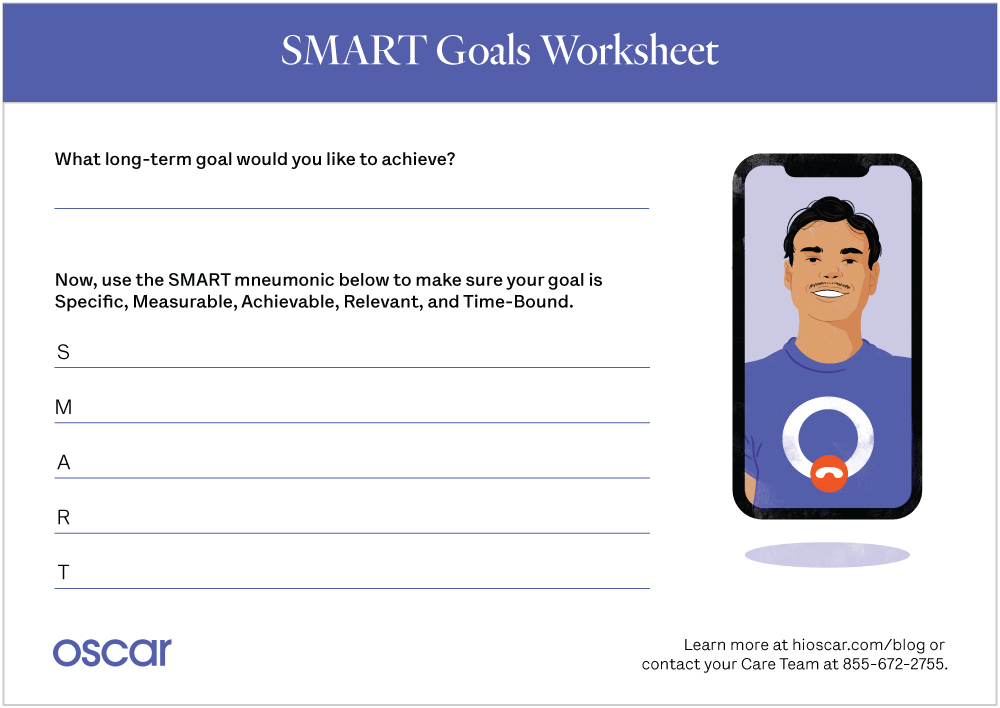
Think about your 2022 health goals as you follow along below, then consider writing them down in the Worksheet to put on your wall or fridge as a daily reminder.
Setting a meaningful goal
The first step in reaching your goals is having them in the first place. When it comes to New Year's Resolutions, the ones that are likely to stick are the ones that you care about the most. So, before you settle on a goal, take the time to reflect on what’s most important to you and what would make the biggest impact on your wellbeing. It can be helpful to think about goals in terms of what they will let you do. For example, “I want to have the energy to play with my grandkids” or, “I want to be able to enjoy that trip that will include a lot of walking” may be stickier than a more general goal like, “I want to manage my overall health” or, “I want to be more fit.”
It’s also important to set goals that are within your reach and reflect where you are in life. Some questions you might ask yourself:
What are my most important health needs right now? Maybe you’re managing a chronic disease like diabetes, have a family history of cancer, or are looking to start a family – set your #1 goal so you don’t get overwhelmed with too many to keep.
Does this change help my loved ones and the people around me? Think about your family, friends, job, community – say being able to be more active could help your kids worry about you less, or simply help you feel more confident in everything you do.
Can I balance my goals with my responsibilities? Plan around your family demands, work schedule, and more so you set yourself up for success.
How much is my current budget and what resources do I already have available, such as health savings plans, a doctor nearby, or a gym? (Don’t worry either way – there’s still plenty you can do without breaking the bank!)
Once you take the time to reflect and settle on the right goal for 2022, the next step is laying the foundation for success: thoughtfully coming up with a plan to stick to your goals – from day one to day 365 – and maybe even exceed them.
Be SMART
One way to go about goal setting is to borrow a tool from the business world – the SMART system. Designed to help make goals that are both meaningful and realistic, SMART asks you to shape your goals so that they meet five key criteria:
Specific: Your goal should be focused so that you know exactly what you’re working towards.
Measurable: Being able to measure progress makes it possible to know if you’re successfully moving towards a goal.
Achievable: Know your limits, abilities, and circumstances and set goals that you can feasibly meet.
Relevant: When you set goals, make sure they make sense for where you are in life. A single person, a parent with small children and a retiree may have similar general health goals, but their life situation may change how they go about achieving them.
Time-Based: Setting goals that have a discrete time frame can create the helpful pressure needed to get moving - and for a New Year's Resolution, there’s a built-in deadline that can make it easier to commit to getting something done within the next twelve months.
How can we make SMART goals work for some common New Year’s Resolutions? Let’s take a look at two common goals.
“I want to get in shape.”
A classic New Year's Resolution – one that is all too often left behind right around the time that the holiday decorations start coming down – is managing your weight and getting fit. This can help limit your risk factors for heart disease, diabetes, and other serious, chronic conditions. With more than 40% of Americans (opens in new tab) considered overweight or obese, committing to being active and eating well is a lifestyle change that many of us are looking to make – even though it can be hard. But using SMART, we can look at how we can turn it into something that you can achieve this year:
Specific: Instead of a vague idea of “getting in shape,” say why you want to be in shape, for example, “I want to have more energy to enjoy my retirement.”
Measurable: Hold yourself accountable with a time, distance or other measurable goal that you can regularly check like, “I will run on the treadmill for 30 minutes, three times per week” or, “I will only eat dessert twice per month.”,
Achievable: Create a picture of what success looks like for you, maybe something like “I will fit into a smaller pant size” or, “I can run a 5K,” and make sure you have the tools needed to get there – such as access to workout equipment or classes, or even setting aside the time to be more active.
Relevant: Make sure the goal fits into your lifestyle and works with the tools you have at hand. If you’re an Oscar member, for example, you have access to fitness benefits that might help you meet your goals.
Time-Based: Set an overarching timeline like, “by next year,” but you can also add shorter-term goals like, “join a gym by the end of January.”
Related Viewing:Setting Health Goals: BMI Management [Video] ![Setting Health Goals: BMI Management [Video]](//videos.ctfassets.net/plyq12u1bv8a/OeYpV5opHkUX6ahYNCyAp/17f37d3df5047d033637fccad441ba7e/mikesmartvid.mp4)
In the end, your SMART goal may look something like this: “I want to fit into my favorite dress and have the energy to properly enjoy retirement, so I commit to running three times per week for at least 30 minutes – either outside in my neighborhood or on a treadmill at the local health club. I’ll sign up for a 5K next November, so I have a concrete event to work towards.”
“I want my family and me to be healthier.”
Your health matters – and so does the health of those you love the most. Today, 1 in 5 American homes (opens in new tab) is multigenerational, meaning that many of us are not just responsible for our own health, but the health of children, parents, and other family members. A New Year is the perfect time to recommit to doing what we can to keep ourselves and our loved ones as healthy as possible, but to reach a goal like this, we need a plan. Using SMART, we can turn this resolution into the base of a healthier lifestyle and future.
Specific: Let’s define “healthier” a bit more and focus on how we can get ahead of health issues by being proactive and seeking out preventative care.
Measurable: Set a checklist of preventative health measures you’ll commit to, like vaccinations, screenings for breast, colon, or prostate cancer, and routine examinations by medical professionals.
Achievable: Make sure that you are set up with a health care plan that covers you and your family with preventative health services that are accessible and affordable.
Relevant: Being more proactive about health means knowing your risk factors. Factors like lifestyle, age, and family history of heart disease, certain cancers, or chronic conditions might make it more important for you to pay attention to specific aspects of preventative care. Speaking with a primary care physician about your risk factors is a good way to make sure that your health goals make sense for you.
Time-Based: Create a plan that helps you and your family meet important health milestones like scheduling routine screenings and checkups at times that make sense for you throughout the year (and then use that as a template for the future).
Setting Health Goals: Resolutions for Families [Video]
This could result in a more specific goal that you can hold yourself to throughout the year like, “I will find a primary care doctor that I trust, make sure that my family and I will each have our annual physical, that we are up-to-date on vaccinations and that I get a colonoscopy before the end of the year.”
Oscar can help you have a healthier new year
When it comes to setting goals, what matters most is that it works for you and makes a difference in your quality of life. Whether it’s focusing on mental wellbeing (opens in new tab), preparing to start a family, or better managing a chronic condition like diabetes (opens in new tab), it’s important to be thoughtful about goals and make sure you have the support you need to achieve them.
Having a long-term health partner that you trust will go a long way to making sure you stick to your goals, whatever they may be. Whether you’re new to Oscar or a long-time member, know that you have access to services and support that can help you meet your 2022 health goals.
With Oscar, you can find an in-network doctor or use our new Virtual Primary Care (opens in new tab)* service to form a meaningful relationship with a health care provider who can help you make the changes you want to see in your life. With Virtual Primary Care (opens in new tab), you enjoy unlimited telehealth visits with the same care team, meaning you can set up a discussion about goals in January and then meet monthly – or even more often – to make sure you’re staying on track.
Oscar also offers rewards for healthy behavior, just one more reason to keep you on the path of healthier living. Using the Oscar App (opens in new tab), you can sync with many leading fitness trackers and earn $1 per day in Amazon gift card cash for meeting your step goals, up to $100 per year.
And as things hopefully return to normal, we can help you get out again with fitness benefits, convenient access to health care services, and other perks that we know can make a real difference for health and wellness. With Oscar, you get the tailored care experience that you need – no matter what the future brings.
Have questions about specific health benefits? Call your Care Team at 855-672-2755, or send a secure message through hioscar.com or the Oscar App. We’re here to help!
*Oscar’s Virtual Urgent Care and Virtual Primary Care offerings vary by market and may not be available in your service area. Oscar’s Virtual Urgent Care offerings are not available in US territories or internationally. Oscar's Virtual Primary Care offerings are only available for members ages 18 and over.
If you live in California, or you have an HSA-compatible high-deductible health plan or a Secure plan, you won't be eligible for $0 follow-up prescriptions. Prescriptions, visits and services may be limited per provider discretion.
Virtual Providers are employed by Oscar Medical Group and are not employed by Oscar Insurance.